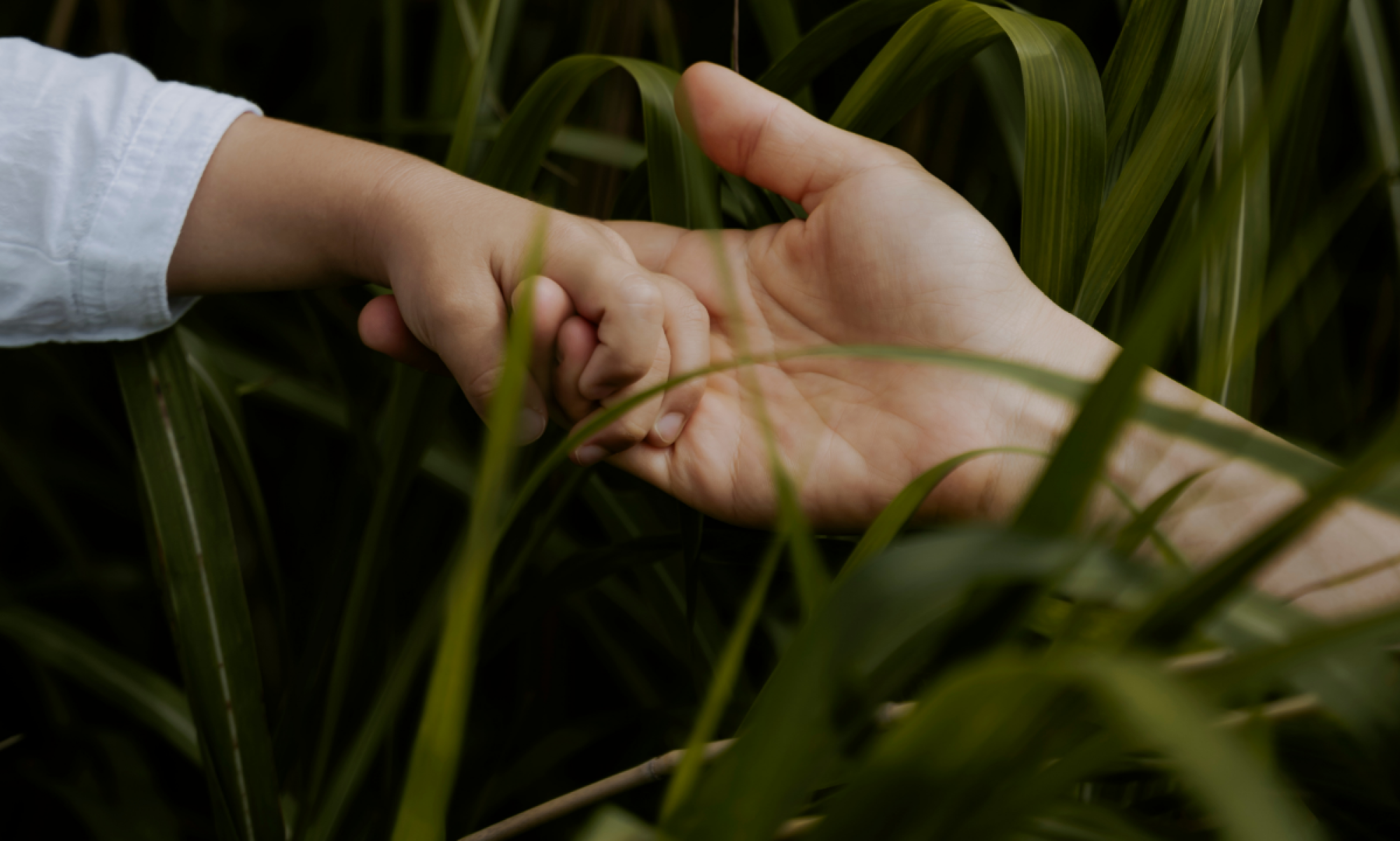

Every family has a drawer. Ours might hold a tangle of old cables, a few birthday candles, and one photograph with no names written on the back. Someone always says, “I should ask Mum who that is.” Someone always means to.
This time of year, when people start thinking about what to give a parent or grandparent, that photograph comes to mind. And then a second thought arrives, almost immediately: She would never agree to it.
We hear that second thought a lot. It is the main reason a family waits another year. So we want to tell you what actually happens when the person who “would never agree” sits down in a chair by the window with a cup of tea and a camera that is not pointed at them yet.
“I’m not that interesting.”
This is the one we hear first, and most. It is said with a small laugh and a wave of the hand, and it is almost always said by the most interesting person in the room.
What it usually means is: I have never been asked. A life looks ordinary from the inside. Nobody thinks their first winter in a new country, or the kitchen they grew up in, or the way they met their husband at a bus stop, is a story. It is simply what happened.
Then someone asks, “What did the bus stop look like?” and the hand stops waving.
We have learned not to argue with “I’m not interesting.” We ask about the bus stop instead. The story arrives on its own, usually within the first ten minutes, and the person telling it is often the most surprised.
“I don’t remember anything.”
People worry that they will sit down, be asked about 1962, and draw a blank. The worry is understandable. Memory does not work like a filing cabinet, and nobody can pull a year off the shelf on request.
But memory works beautifully by association. A photograph, a recipe, the name of a street, the smell of a particular soap. One small, concrete thing opens a door, and behind that door is a room, and in that room is a conversation someone had sixty years ago, word for word.
This is why we hold a relaxed pre-interview before the recording day. It is not a test. It is a quiet conversation about which rooms are worth opening, and which ones you would rather leave closed. By the time the camera is on, nobody is being asked to remember 1962. They are being asked about the soap.
“Nobody will watch it.”
Here is what we would gently say to that. The people who will watch it most are not in the room yet. They are a grandchild who is three, or not born, or too busy at nineteen to sit still for a story. In twenty years that person will want nothing more than to hear this voice say their name.
A life story film is not really made for the family you have today. It is made for the family that will exist when you are not there to ask. That is a strange and lovely thing to give, and almost nobody regrets it.
“I’ll cry.”
Probably, yes. Most people do, somewhere in the second hour, and it is usually not where they expected. It is rarely the hard years. More often it is a small kindness, a parent’s hands, a song.
We do not rush past it, and we do not dwell on it. The camera stays where it is, the tea gets topped up, and the story carries on when the person is ready. In the finished film those moments are the ones families say they watch again. A life told honestly has some weather in it.
“I’m no good on camera.”
Almost nobody is, for the first few minutes. Then something ordinary happens: the person forgets the camera, because the conversation is more interesting than the lens. Our job is to make the room feel like a kitchen table, not a studio. Soft light from a window. One person asking, with time to listen. No script, no teleprompter, no second take unless someone wants one.
And for those who truly would rather not be filmed, there is a version with no camera at all. A Story Podcast is the same guided conversation, recorded in audio only, and for some people it is the more intimate form.
How to give this without making it awkward
If you have read this far, you may be thinking about a particular person, and about how to raise it. A few things that help.
Lead with the photograph, not the product. “I found this in the drawer and I don’t know who’s in it” is a much easier conversation to start than “I’ve booked you an interview.” Let the curiosity come first.
Make it about the grandchildren. Many parents will not do something for themselves. Almost all of them will do it for a grandchild who “will want to know one day.”
Give them the choice of when. A gift card lets the person book in their own time, which takes the pressure out of the moment of giving. Nobody has to perform on Christmas morning.
Start small. A Starter Session is a 30-minute conversation on camera with a guided question booklet, edited into a short film. It is a gentle first step, and if your parent decides they have more to say, the full amount is credited toward a longer film within 60 days. Many of the fullest life stories we have filmed began with someone who said, “Let’s just try the short one.”
Say the honest thing. Sometimes the simplest line is the best one: “I want to be able to hear your voice when I’m old.” It is hard to say. It is almost impossible to refuse.
The photograph with no names on the back
We began with that drawer, so we should end there. Whoever is in that photograph, the person who could tell you is probably sitting at your table this season, saying they are not that interesting.
They are. Ask about the bus stop.
If you would like a hand, you are warmly invited to book a free pre-interview. We would be glad to hear about the person you have in mind.